Middle Stain
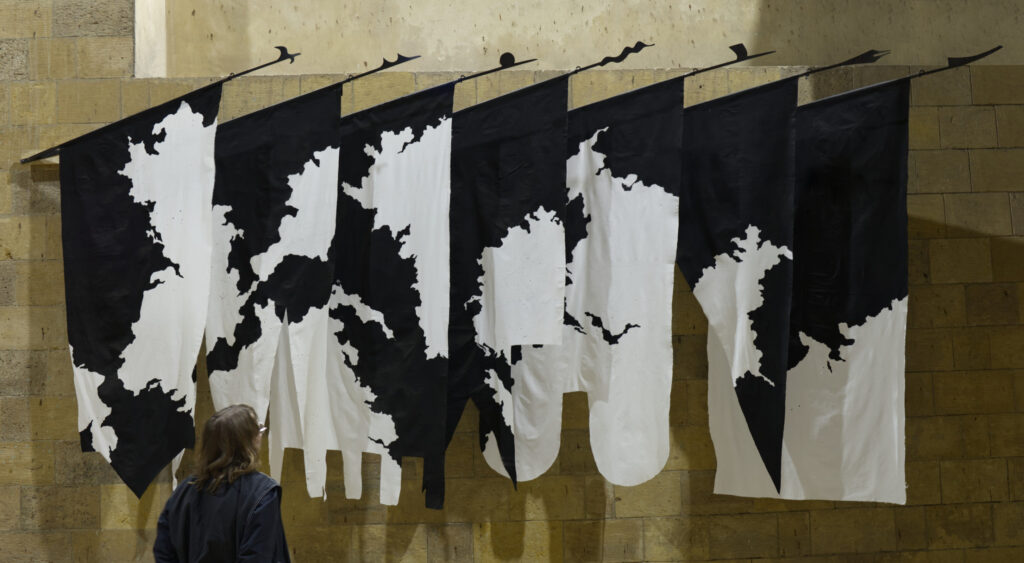
Objects, fabric, and steel flagpole toppers, 120 cm x 240 cm each
Stains on Water:
The shape of a stain might appear random and unintentional, suggesting coincidence, but it could also result from deliberate control.
In the darkness, the sea’s water resembles a vast surface carrying black ink, with each tiny droplet contributing to its composition. Ink and water share common traits: they flow, dry, and transform shape as they move, almost as if each motion affects or erases the previous one.
Stains on a Lens:
Zooming out to view the world’s geographical map, it resembles a collection of stains floating on a perpetually moving expanse of water.
Upon closer examination, imaginary lines emerge, dividing the scene into distinct fragments. These lines dictate where to stay or leave, constantly shifting through time.
By meticulously zooming in on an ink stain, we discover micro-details that form words, images, history, and future visions. These ink stain collections gain meaning only when viewed from the necessary distance.
Stains on a Flag:
Flags encapsulate meanings, signifying unity, affiliation, and distinguishing those who belong from those who don’t. Standing beneath or behind a flag imbues it with symbolism, sometimes even reaching sacredness.
These flags are stained with ink, creating shapes reminiscent of maps. The flagpole toppers resemble the tips of writing or war instruments.
Related exhibition:
- 2026 “Something Else” (known as the Off Biennale Cairo), Bayt Al Sinnari, Egypt